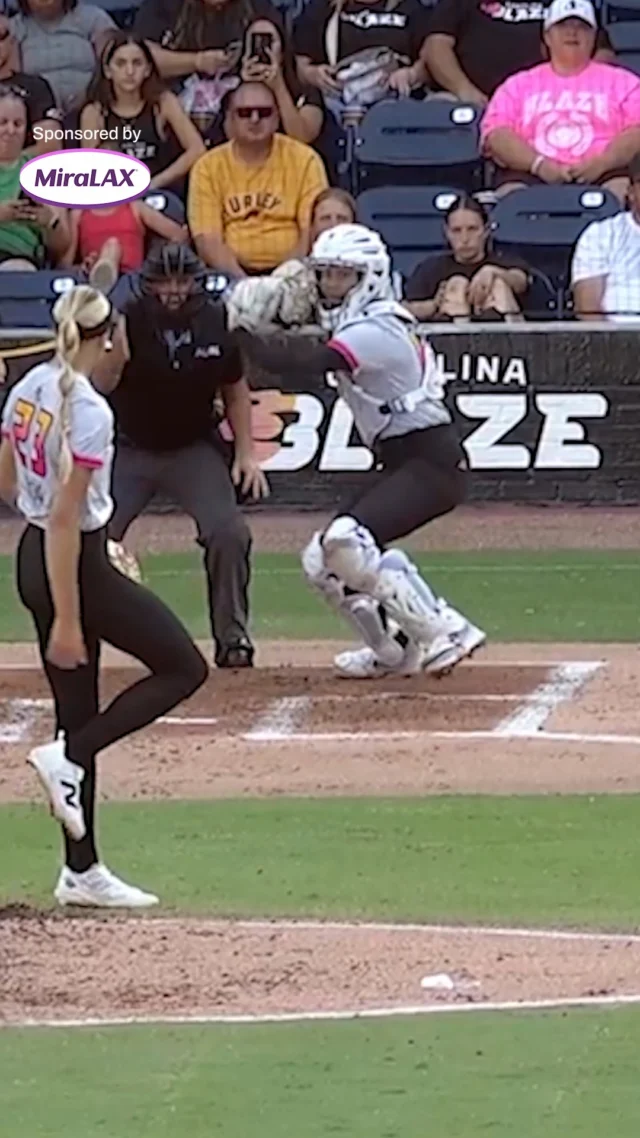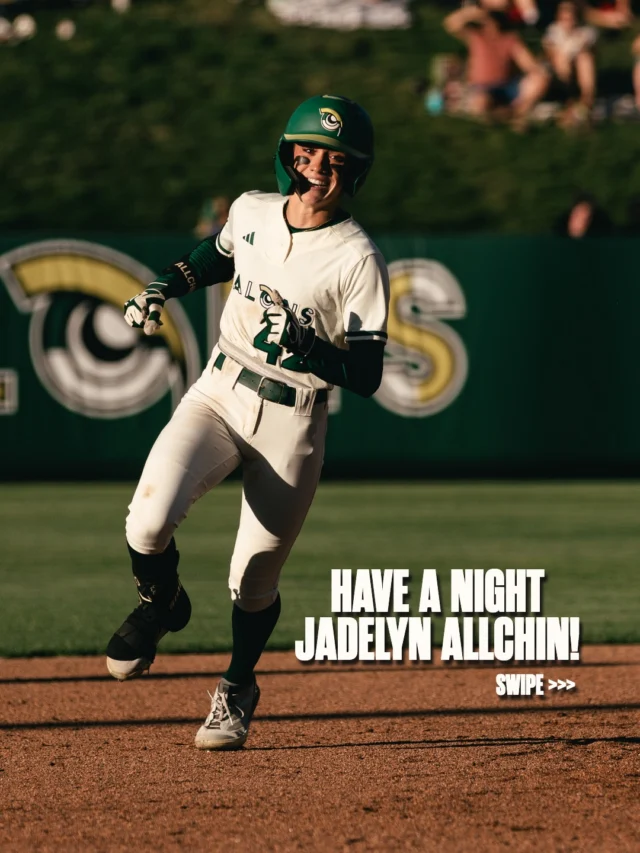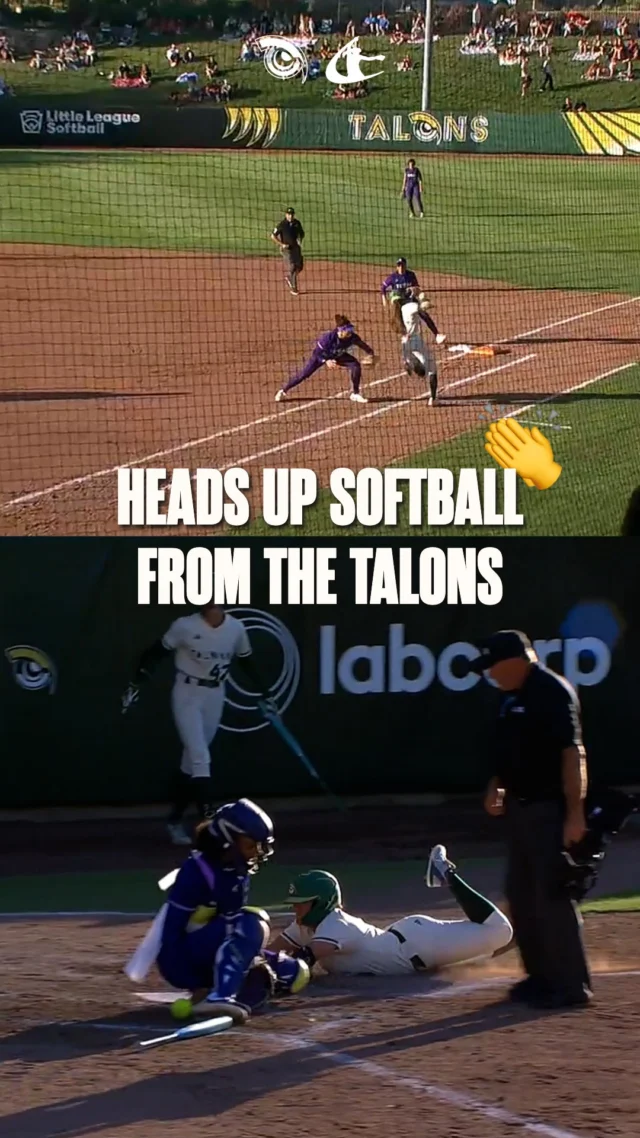


The sprint of the Athletes Unlimited Softball League season is racing along, with standings contention stronger than ever.
The Utah Talons continue to sit at the top and move towards locking in a spot in the 2026 Championship Series, but a battle wages for the second- and third-place positions.
This is a breakdown of each team’s strengths and weaknesses at the halfway point in the season. Look out for the key stats predicted to have the largest impact on the franchise’s success or struggles.
1. Talons are dominant yet again
There have been major changes in the league from year one to year two: new team, home cities, and a plethora of additional talent. But what hasn’t changed is that the Talons’ pitching staff is dominant yet again.
In 2025, they rode the elite staff to the first title game, and it looks as though they’ll do that again. They sit with the best record (12-4) and ERA (2.29) in the league, and it’s a full 1.00 better than the next team’s staff.
Montana Fouts picked up right where she left off in the championship game last July when she threw a shutout against the Bandits to clinch the title. In fact, she’s the best pitcher in the league so far this season, throwing the most innings (44.0) and a 1.91 ERA. She’s been mowing batters down with a league-high 41 strikeouts and five complete games.
Reigning Pitcher of the Year Georgina Corrick just returned from Japan, and the only team that has faced rookie Taylor Tinsley is the Texas Volts. She threw a complete game shutout, and the Talons have not had to use her since.
Key stat: They have the rare ability within the AUSL to use their arms strategically yet sparingly.
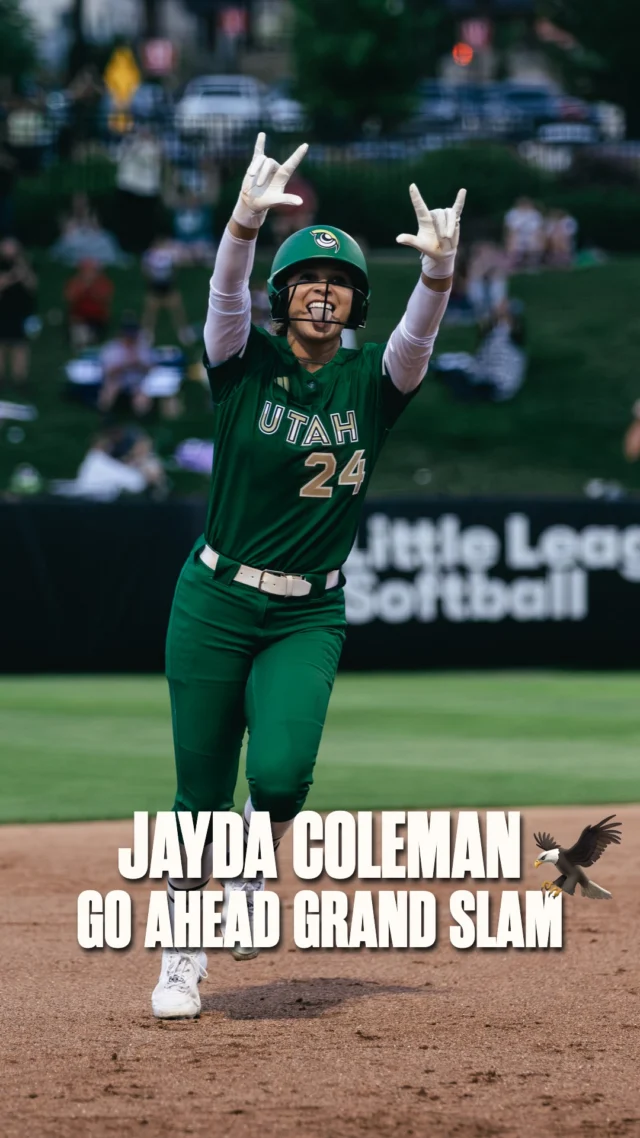
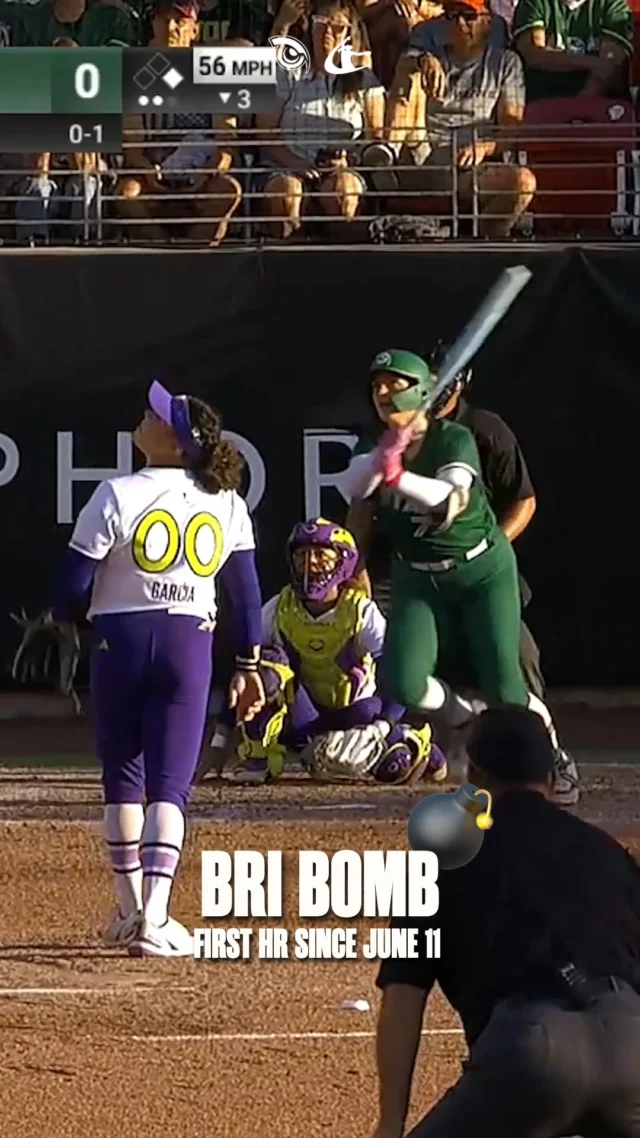
Offensively, the Talons hit decently for average, but their slugging isn’t very high. However, it hasn’t needed to be with how dominant the staff is at limiting runs. Despite spending time without Jayda Coleman, Hannah Flippen, and Bri Ellis — all of whom were on the Injured Reserve List for part of the first half — players out of the Reserve Pool for the Talons have made a big impact. Sarah Gordon, who replaced Sharlize Palacios behind the dish, was particularly hot while on assignment with the Talons. Replacement player Kaylie Wyckoff has provided some much-needed offense, too.
The Talons are rolling and don’t expect that to slow down. They’re outscoring opponents by 28 runs, but what stands out is that they get better as the game goes on. Opponents score less and less the deeper into a game they get with the Talons. They tend to explode early, then cruise to victory.
They have athletes who are menaces on the base path, too; they’re tied for the league lead in stolen bases at 10 total and have only been caught twice.
Talons Offense by Innings

They also have a clutch factor that makes for a championship-contending squad. For example, their pitching improves with two outs; opponents hit .182 against them in this scenario. They lock in for advancement opportunities, advancing runners with a .445 average and hitting .323 once someone reaches third base with less than two outs.
It’s not that the Talons aren’t beatable – it’s that they will not beat themselves. In fact, their four losses have only come when the opponent scores first.
Key stat: They have not relinquished a lead all season. They’re 4-2 in one-run games with opponents. So once they’re in the driver’s seat, it’s on.
Ain’t no rally like a Cascade rally
Most numbers point away from the Portland Cascade being one of the most successful teams in the league, and yet they continue to thrive.
They are the worst-hitting team for average, sitting at .232. Their slugging and OPS are also at the bottom. They’ve outscored opponents by only seven runs, so how are they in second place in the standings?
First, they hit well situationally. When it’s time to capitalize, the Cascade tend to find a way. They improve to hitting .253 with runners on. Bases empty, they’re only hitting .213, but once they’re loaded, that jumps to .368. The Cascade’s hitting is extremely contagious and dependent on rallies.
Key stat: Their success in advancing runners is second-best in the AUSL at .483.
Keep in mind, this is the only team to topple what feels like the Titans that are the Talons. They swept them in Salt Lake City in 3-1, 2-1, and 3-2 wins. All of this points to what we know from the Talons’ success: great pitching beats good hitting.
Second-year player Sam Landry and rookie Kenzie Brown have led the team to five of their wins. Landry has thrown the bulk of their innings (26.2), with Brown close behind (20.1). Kelly Maxwell has had a handful of starts but has been up and down at times. What could push the Cascade staff to be even more competitive is the return of Carley Hoover from playing overseas. She only surrendered one hit in her first outing and threw five innings.
Cascade Situational Hitting

Key stat: It should be noted that this staff does not give up the long ball: only six home runs have been surrendered by the Cascade pitching staff.
It’s simple, but this is where the top two teams find success in the circle. They force opponents to push the runs across themselves. While the Talons will shut you down, the Cascade will make their opponents work for it, which can be hard to do against one of the top defenses that has a .973 fielding percentage.
Pitching will have to continue its consistency for the Cascade’s meager offensive numbers, and while there’s no advanced stat for this, it does seem like they are thriving on the power of friendship.
Key arms and offensive momentum fuel the Blaze
Neck and neck with the Cascade all season has been the Carolina Blaze, who, like their record, are above the league average in most categories. They have the third-best team ERA in the league at 3.75. As a team, they fall to fourth with a batting average of .256, but their slugging percentage (.432) and OPS (.779) jump to third.
The granular numbers don’t tell us much about the Blaze, but there are trends in when they win and lose. Carolina tends to give up the most runs in the first three frames of a game, with opponent scoring dropping off in the fourth through ninth.

They outscore their opponents by 12 runs, which is much better than the Cascades’ seven. The difference is they don’t win when it’s close or a pitcher’s duel.
Key stat: The Blaze are 0-5 when they score three or fewer runs.
All six losses have been in tight ball games, except for a 12-4 defeat by the Cascade. The positive is that their record could be even better than it is. What they need to figure out over the back half of the season is how to generate momentum when things aren’t going their way or handle the pressure better.
Pitcher Karlyn Pickens (4-1) is the only pitcher with an ERA in the 2.00s and has led them to the majority of their wins. Aleshia Ocasio (2-1) has been a solid arm in the circle, but surrendered six runs in 2.0 innings on Wednesday evening. They’ll need more production from arms like Keilani Ricketts and Emma Lemley down the stretch.
Bandits have climbed to .500, what’s next?
The Chicago Bandits could be the most dangerous team in the league right now. They have been climbing out of the four-loss hole they started off the season in, but granted, they did kick things off against the Talons, who tend to have their number.
And just like their foes from last year, they have a calling card that they’ve stuck with: Chicago has the best overall offense in the league again. They’re the only team hitting above .300 through June and also have put up a .420 on-base percentage, .553 slugging percentage, and .973 OPS.
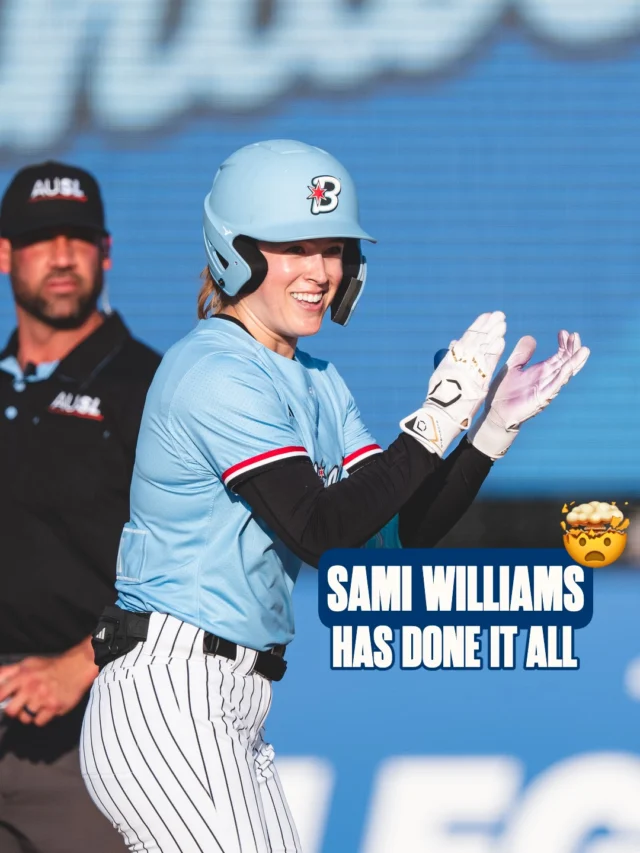
They’re led by the best hitter in the league, Sami Williams, who is hitting video game numbers. She has 21 hits in 39 at-bats and a 1.791 OPS. As a team, they’re trending in a robust direction. After leaving the yard just two times in their first four games, Chicago has blasted 13 home runs in their last nine games (Williams has a team-high four).
There aren’t many patterns to their record; they lose and win in close matchups as well as blowouts. But their explosive offense does mean that if it’s a barn burner, they’re coming out on top.
Key stat: All of their victories have been when they have scored four or more runs.
Their recent losses to the Volts do cause some concern; they lost 6-2 and 6-4 back-to-back days in Round Rock, Texas, but turned it around with a dominant 14-0 win over the Oklahoma City Spark. They combined for 22 runs on 25 hits in that two-game set with OKC. They most recently stomped the Cascade at home, 13-3.
Improved consistency from newly added arms will be big, with support coming in from Lexi Kilfoyl and Kat Sandercock, who were playing in Japan. As a staff, though, they need to cut down on the long ball; they’ve given up 20 home runs this season. A positive is that this staff gives up the fewest free bases, with only 24 walks.
Spark needs to stop the bleeding
It’s now or never for the Oklahoma City Spark. They took a step in the right direction on Wednesday evening, snapping a five-game losing skid.
They allowed 38 runs during the five-game slide, including five or more runs in every contest. Comparatively, they gave up only 41 runs in the first nine games of the season.
Key stat: The Spark staff has a 5.38 ERA, the highest in the league, along with an inflated opponent batting average of .310.
Lyndsey Grein is back as a reserve player who has flexed on and off the roster throughout the year, so that should help. She threw 14.1 innings for the Spark and held her ERA to 1.47, and picked up a 2-1 record.
And while they still lead the AUSL with 20 home runs this season, the explosive production has slowed. They had multiple long balls in 8-of-15 games, with only one in the other seven games combined. This lineup also hurts without Maya Brady, who is currently on the seven-day Injured Reserve List. Teams can live and die by the home run ball, so they’ll need the circle to keep them in closer games.
Volts woes continue into year two
The Texas Volts finished the inaugural season just above the Blaze with an 8-16 record, and it looks like their woes for wins have continued into 2026.
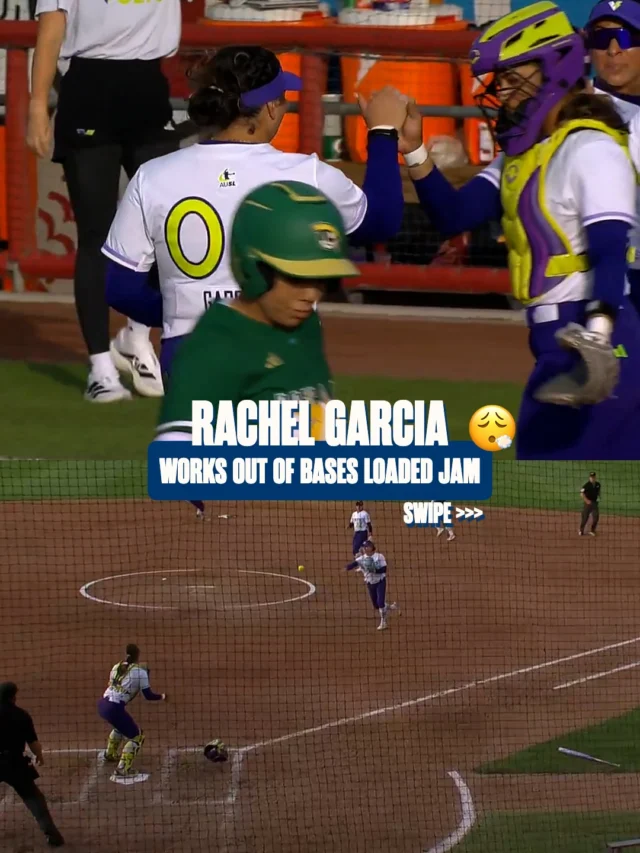
Despite an almost entirely new bullpen aside from Rachel Garcia, their team ERA is comparable between last year (4.21) and now (4.87). Their 25 home runs are the most surrendered by any staff. They’ve also struggled in the field with 20 errors.
Key stat: The back half of games is where they struggle; opponents have scored in the double digits in the fourth through the seventh frames.
They’ve missed Amanda Lorenz, Mia Scott, and Kelsey Stewart Hunter. Then, in her first outing, pitcher Alyssa Denham went down. With this many rookies, replacement players, and athletes competing out of their defensive positions, the Volts were bound to be in an uphill battle.
There are bright spots, though. Aliyah Binford has been an incredible two-way player for the Volts. She’s the only pitcher with an ERA below 3.00 and is one of the best bats in the lineup, too. She’s currently on a nine-game hitting streak.
All eyes on July
Nearly every game in July could matter to teams, especially those in the middle of the pack vying for No. 2 and No. 3 in the standings.
The playoff slate features a play-in game on July 23 between those two franchises, and the winner will face the regular-season champion. The 2026 AUSL Championship will be held at Davis Diamond in College Station, Texas, with the best-of-three Championship Series running from July 25 to July 27.
Savanna Collins is the Senior Reporter for the AUSL. You can follow her on Instagram @savvyco.